Feature list

Everything it does.

One extension, one job — but the disguise goes further than a coat of paint. Every screenshot below is the real extension, not a drawing of it.

Who it's for · FAQ

Free 10-minute trial · No card required · Works in Chrome and Edge

claude.ai/chat/a1b2c3
You Draft a polite reply to the landlord about the broken heater.
Claude Here's a draft you can send: “Hi Sam, following up on the heater in unit 4B — it's been out since Monday and the cold nights are…”

Flip the switch — that's the whole product.

On the page

What claude.ai turns into once the disguise is on.

01

Your chat, rendered as a document

Title bar, menu row, toolbar, ruler, page and a blinking cursor — the chat interface is replaced end to end, not tinted. The conversation underneath keeps working exactly as it did.

It holds up when someone looks closer, too: the text selects like document text, long conversations run onto new pages with real page breaks and margins, and the toolbar and menus open and close like the real thing.
The disguised page: a document titled Untitled document with a menu row, formatting toolbar, ruler and a white page holding the conversation as plain text.
Live capture of the packed extension.
02

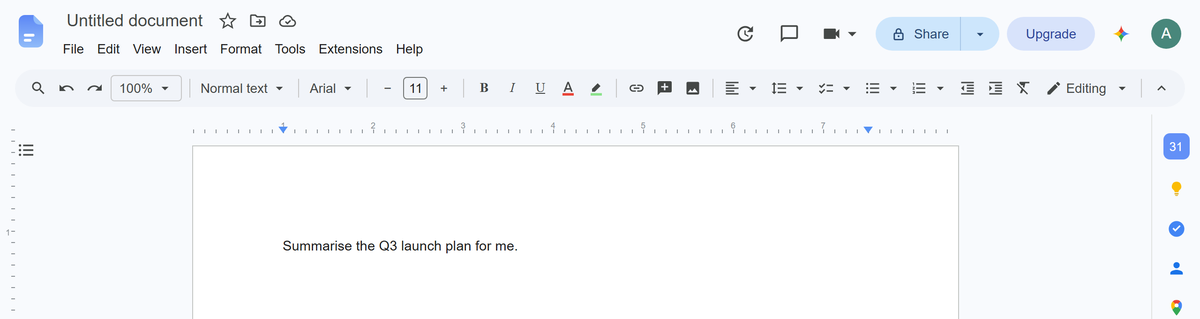
You type in the document

Click anywhere on the page and type on the cursor line, like any document. Enter sends it to Claude; Shift+Enter gives you a new line instead. There is no chat box on screen at any point.

A sentence being typed straight onto the document page: “Summarise the Q3 launch plan for me.”
Typing into the disguised page.
03

Replies arrive as body text

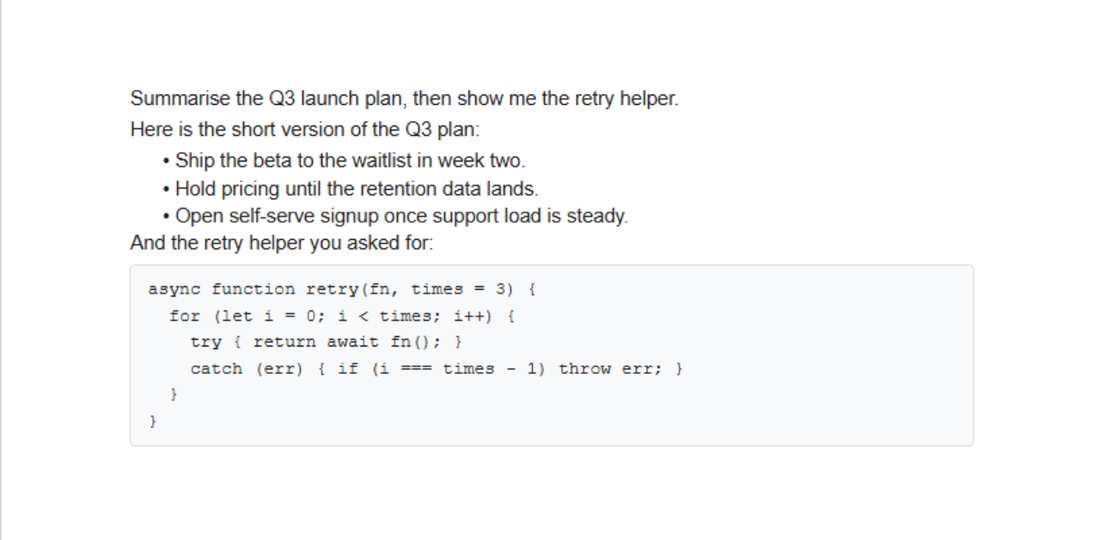
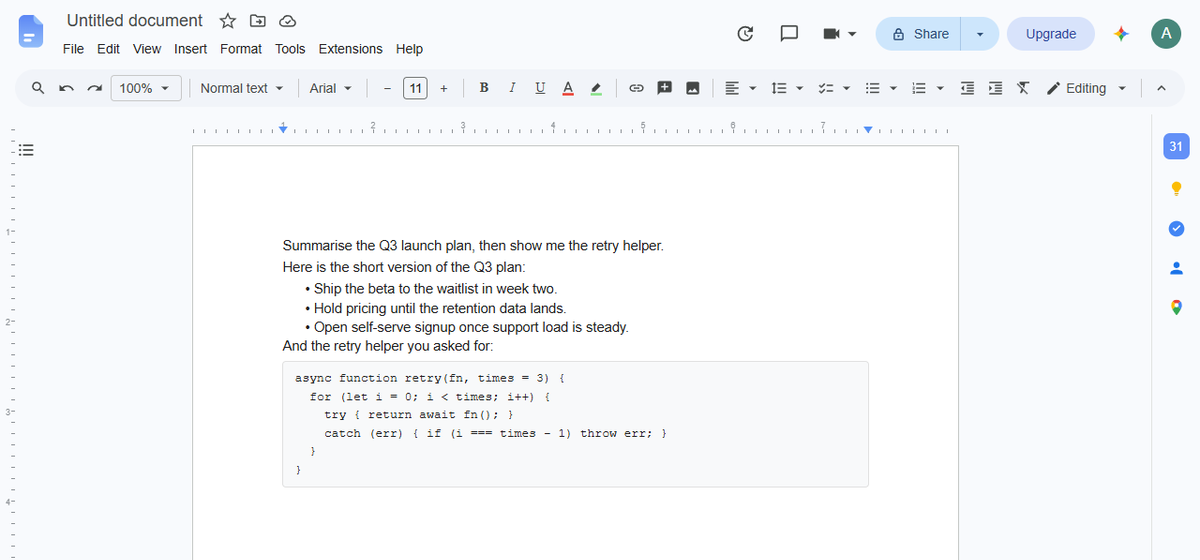
Claude's answer types itself onto the page live, as ordinary document text — it looks like someone is writing. Paragraphs, bullet lists and code blocks all keep their shape, and long replies keep up as they stream. Nothing renders as a chat bubble.

A reply on the page as document text: a paragraph, three bullet points, and a monospaced code block in a grey panel.
Live capture — lists and code blocks intact.
04

Attach files the normal way

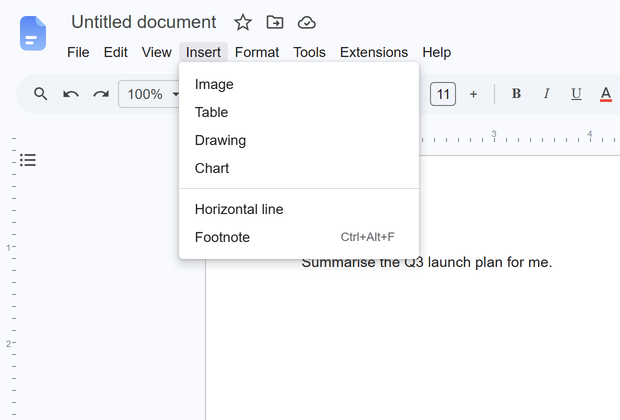
Four routes open your real file picker: Insert → Image, the image button in the toolbar, the + at the bottom of the right-hand icon strip, or the + in the side panel. Whatever you pick goes with your next message.

Any of the four works the same way, so use whichever one your hand is already near.

The Insert menu open on the disguised page, listing Image, Table, Drawing, Chart, Horizontal line and Footnote.
Insert → Image opens your real file picker.
05

See what's attached, under Help

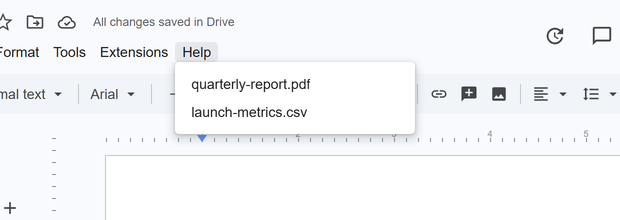
The Help menu isn't a menu — it's the list of files attached to this conversation, oldest first. It reads the conversation itself, so files you attached days ago are listed too, not just the ones from this page load.

It stays out of the way until there's something in it.

The Help menu open on the disguised page, listing two attached files: quarterly-report.pdf and launch-metrics.csv.
Help lists this conversation's files.
06

Files Claude makes, one click away

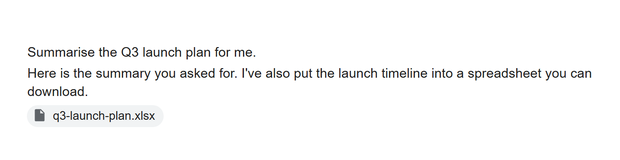
When Claude creates a file for you — a spreadsheet, a script, a document — it shows up in the reply as a small file chip, the kind a real document uses for an attachment. Click the chip and the file downloads.

No download panel, no chat card — just a chip in the text.

A reply on the document page ending in a grey file chip named q3-launch-plan.xlsx.
A file Claude made, as a chip in the reply.
07

Switch chats without dropping the disguise

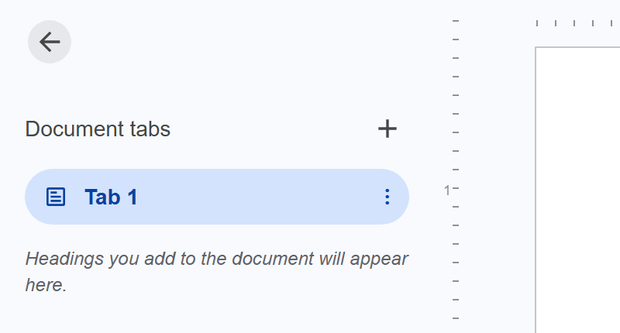
Open the side panel with the outline button at the top-left of the page area. Your five most recent conversations sit under “Tab 1” as document tabs — click one and it opens, still disguised. The arrow at the top closes the panel again.

The side panel open, showing a “Document tabs” heading, a highlighted “Tab 1” entry, and five recent conversations listed below it as document tabs.
Recent conversations, as document tabs.
08

Name it whatever you like

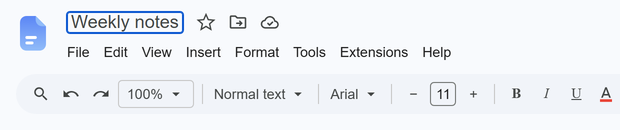
Click the document name at the top, type, and press Enter. Your browser tab title changes to match, so the tab strip gives nothing away either. Leave it empty to go back to the default.

The document title being edited in place, reading “Weekly notes” inside an active text field.
Renaming the document.
09

The menus actually open

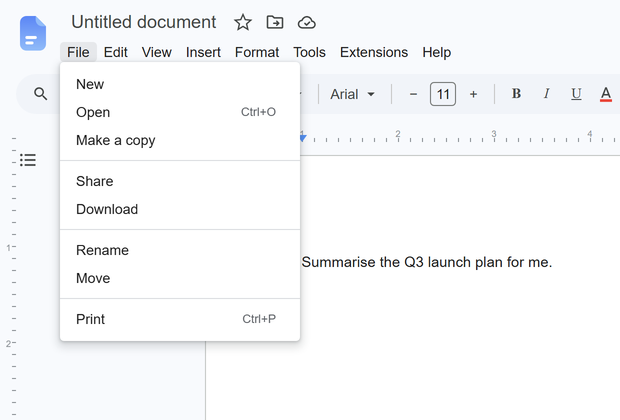
File, Edit, View, Insert, Format, Tools and Extensions are all live. Click any of them and the dropdown opens with the items and keyboard shortcuts you'd expect — so the page holds up to more than a glance.

Two of them go further: Insert → Image opens your real file picker, and Help lists this conversation's files (see 05).

The File menu open on the disguised page, showing New, Open, Make a copy, Share, Download, Rename, Move and Print with their shortcuts.
Every menu in the row opens.
10

Change engine from the avatar

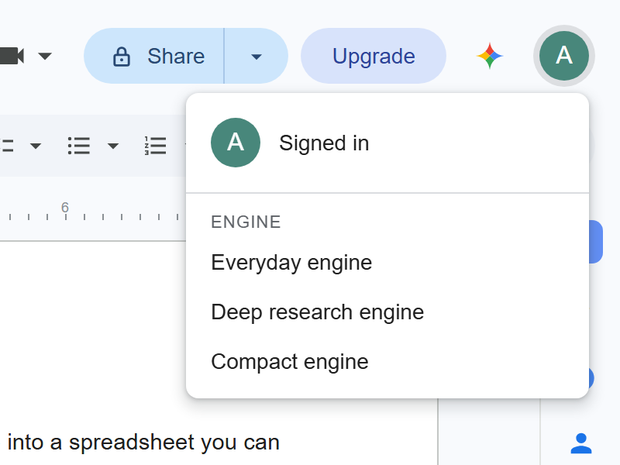
The avatar at the top right opens an account-style dropdown with your engines under a plain “Engine” heading. Pick one and it really switches — the list is read from your own account each time it opens, so it shows whatever you actually have, never a hardcoded menu.

The account dropdown open under the avatar, showing a “Signed in” row and an ENGINE heading above three engine choices.
The engine picker, in account-menu clothing.
11

You can tell when it's thinking

A long pause before the first word would otherwise read as a message that never sent. So the save-state line beside the document name does the job: Saving… with a spinner while the answer is coming, All changes saved in Drive once it has landed.

The document header with a spinner and the text “Saving…” next to the title. The same document header now reading “All changes saved in Drive”.
Generating, then done.
12

One click out

Click the document icon in the very top-left corner — the one in every screenshot above — and the tab goes straight to a real documents home page. One click, no chat left on screen, nothing to close.

The toggle and your account

How you turn it on, and what comes with the licence.

13

One toggle, nothing else

Click the ClaudeDisguise icon in your toolbar and flip the switch. On or off takes effect instantly, without reloading the page.

The setting sticks. It survives a reload, applies to every claude.ai tab at once, and a tab you open later comes up already disguised — so there's no flash of the real interface to catch.

Turning it off restores the normal interface. The chat underneath is hidden, never closed — your place in the conversation and anything half-typed are still there when you toggle back.

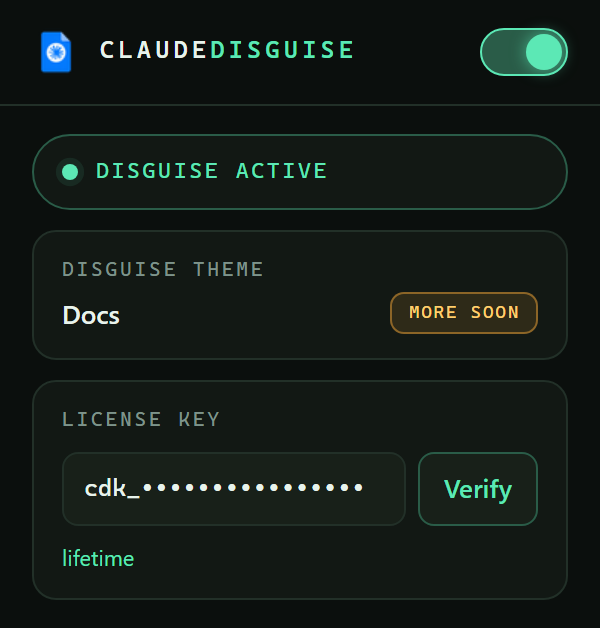
The extension popup: a ClaudeDisguise header with an on switch, a “Disguise active” status row, a “Disguise theme” card reading Docs with a “More soon” chip, and an “Access” card reading lifetime.
The extension popup, as it ships.

Also included

  • Chrome and Microsoft Edge — one extension from the Chrome Web Store, no separate builds
  • Your existing chats, projects and history stay exactly where they are; only the look changes
  • A licence key tied to your account, active on one device at a time, resettable from your dashboard whenever you want
  • Nothing leaves your browser — the extension makes exactly one outbound request, to check your licence key. Message text is read from the page you're already looking at, drawn on screen, and written nowhere else
  • No analytics, no telemetry, no third-party SDKs, and no access to any tab other than claude.ai
  • Fails safe — if claude.ai changes its layout and part of the disguise can't find what it needs, that part is left as Claude's normal page. You see the ordinary chat, never a broken one
  • Doesn't need to phone home constantly — once a paid licence is verified, the extension keeps working for up to 7 days without checking in again (the 10-minute trial has to stay connected)
  • All theme updates while your plan is active — lifetime keeps them forever

Who it's for

Anyone whose screen is seen by more people than they'd like.

Shared spaces

Open-plan offices, coworking desks, libraries, cafés and trains — anywhere people walk behind you.

Screen shares and demos

A plain document doesn't pull the room's attention away from what you're actually presenting.

Calmer writing

Some people simply find a quiet page easier to think on than a chat window.

Desktop Chrome or Edge

Any desktop Chromium browser that installs from the Chrome Web Store. Extensions don't run on phones.

Questions

Does Claude work any differently?

No. Your messages go through claude.ai exactly as they normally would — same account, same history, same limits. Only what's drawn on screen changes.

Can I still choose a different model?

Yes. Click the avatar in the top right of the document; it lists the models Claude currently offers you.

Do I lose anything when I turn it off?

No. The real chat is hidden, not closed, so your place in the conversation and anything you'd half-typed are still there.

Does it read or store my conversations?

No. The only request the extension makes is checking your licence key with this site. It can only access claude.ai and this site, has no analytics or telemetry, and sends nothing from your chats anywhere. Details are in the privacy policy.

What happens when the trial ends?

The toggle locks and claude.ai goes back to normal until you add a plan. Your licence key stays the same — once you've paid, flip the toggle again and it unlocks.

What if claude.ai changes its layout?

Whatever the disguise can't find is left as Claude's normal page until an update ships — you see the ordinary chat, never a broken one.

Try the whole thing.

Every account starts with a free 10-minute trial. No card required.

Start your free trial